By the numbers
Updated
Independent desk. Figures are traced to named sources and corrections are logged — see the editorial policy.
The courts are nearly the same size. The arc, the lane and the ball are what change between the NBA, the NCAA and the international game.
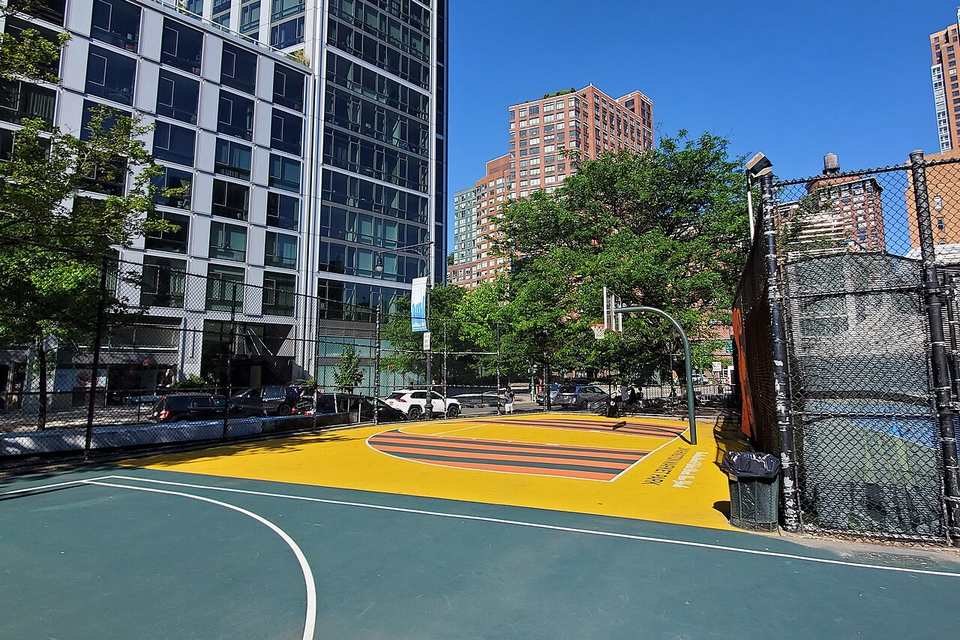
_013a_-_Basketball_Courts.jpg)
Look at the lines on a basketball court and the NBA, college and international versions seem identical. They are not. The overall size is almost the same, and the numbers that differ are the ones that decide how the game is played.
The court
An NBA court is 94 feet long and 50 feet wide. College courts in the United States use the same dimensions. FIBA, the body that governs the international game, uses a court 28 metres by 15 metres, slightly smaller at about 91 feet 10 inches by 49 feet 2½ inches. The rim is 10 feet above the floor everywhere.
The three-point line
- NBA: 23 feet 9 inches from the basket at the top of the arc, and 22 feet in the corners, where the arc runs into the sideline.
- FIBA and WNBA: 6.75 metres, or 22 feet 1¾ inches, all the way around.
- NCAA men: 22 feet 1¾ inches, the same distance as FIBA since the 2019–20 season, when college moved the line back from 20 feet 9 inches.
The NBA line is the longest at the top, and the 22-foot corners are the shortest shot in the NBA, which is why coaches design plays to reach them.
The lane
The painted area under the basket is 16 feet wide in the NBA and 4.9 metres, about 16 feet, in FIBA play, which replaced an older trapezoid with a rectangle. American college courts keep a narrower 12-foot lane. The free-throw line is 15 feet from the backboard plane in all three, which puts it 19 feet from the centre of the rim.
The ball
The men's ball is size 7, about 29½ inches in circumference. The women's ball in the WNBA, college and FIBA is size 6, about 28½ inches. The difference is why a shooter moving between men's and women's competition notices the grip before the distance.