Rules reference
Updated
Independent desk. Figures are traced to named sources and corrections are logged — see the editorial policy.
College overtime has no clock, no kickoffs and a mandatory two-point attempt after a few rounds. Here is the sequence, step by step.
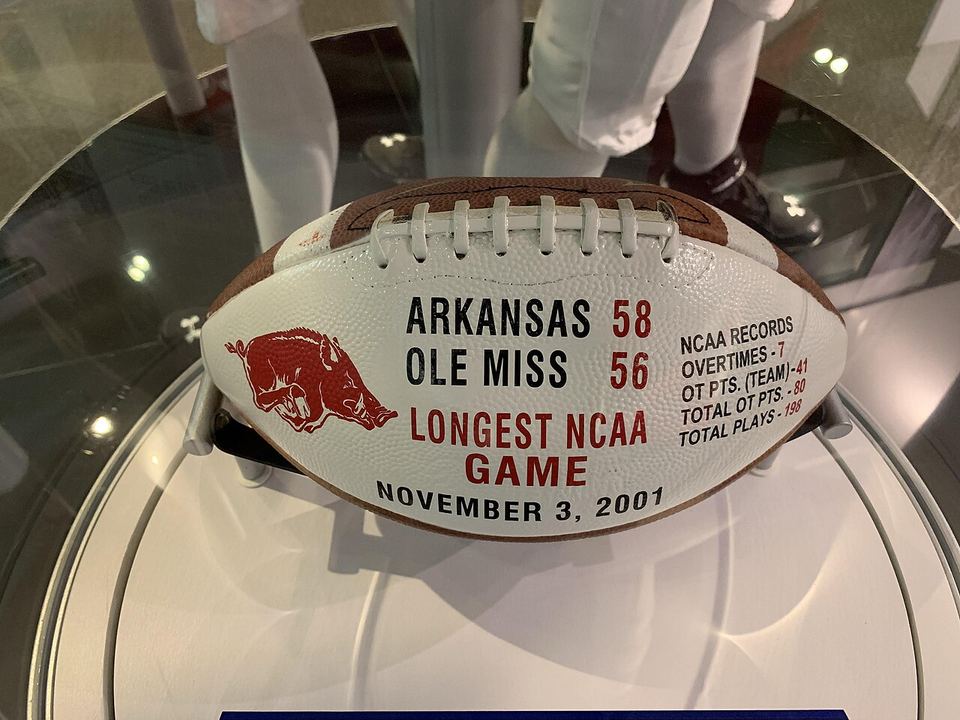

If a college game is tied at the end of regulation, it is settled by a format that looks nothing like the rest of the game. There is no overtime clock and no kickoff. Instead each team gets a possession starting from the same place, and the two possessions are compared.
The basic exchange
A coin toss decides who chooses first: the winner picks whether to start on offense or defense, or which end zone to use. The team on offense starts with a first down at the opponent's 25-yard line. It plays until it scores, turns the ball over, or fails on fourth down. Then the other team gets the same ball in the same spot. Whoever has scored more after both possessions wins; if it is still tied, another round is played, and the teams swap who starts on offense.
Rounds one and two
In the first two overtimes a team that scores a touchdown may kick the extra point or go for two. A field goal is worth three. Possession ends on a score, so there is no chance to run the clock or play for a long drive.
From the third overtime: two points are mandatory
Starting with the third overtime, a team that scores a touchdown must attempt a two-point conversion. The extra-point kick is no longer an option. The rule exists to bring a long game to an end sooner by raising the stakes on every touchdown.
From the fifth overtime: no more drives
In the fifth overtime and every one after it, the format changes again. The teams stop playing from the 25-yard line and instead alternate two-point attempts from the three-yard line. The team that converts when the other fails wins. It is closer to a shootout than to a drive.
Differences from the NFL
NFL overtime is played in timed periods and the two sides can be separated by a single score on the first possession, depending on the season's rule. College football uses the same starting spot for both teams and no clock at all, so a game can end at any time of day and any score. The fifth-overtime two-point shootout is unique to the college rulebook.