Rules reference
Updated
Independent desk. Figures are traced to named sources and corrections are logged — see the editorial policy.
Most flags fall into three yardage tiers. Which tier a foul belongs to, and whether it also gives an automatic first down, is the part that decides drives.
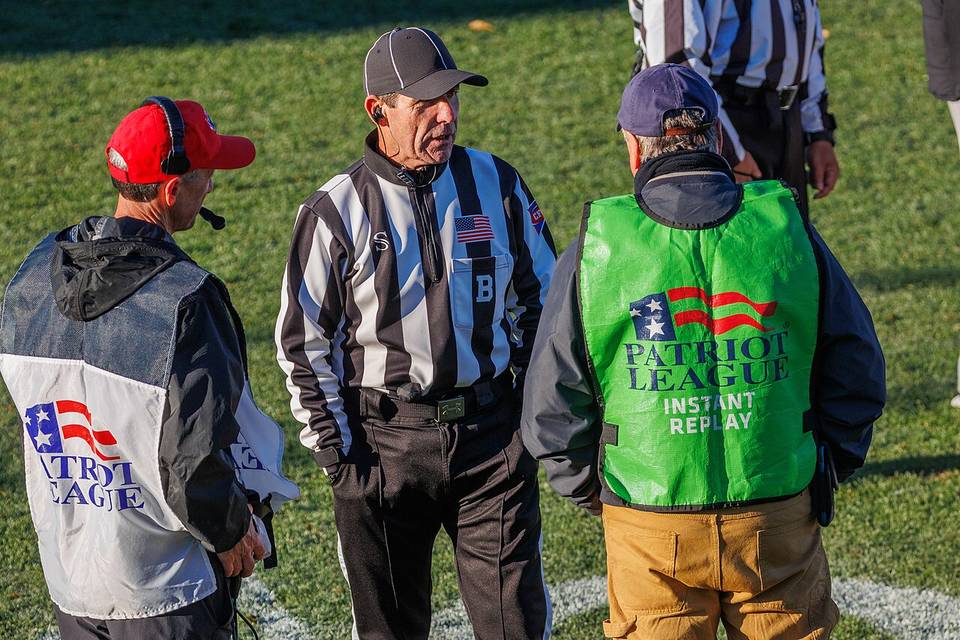

A flag on the field can move the ball five, ten or fifteen yards, or it can move it to the spot of the foul. Knowing which is which turns a stoppage into information: you can tell, before the referee speaks, roughly how bad the call is.
Five-yard fouls: procedure
These are mistakes of timing and alignment, not violence. They cost five yards:
- false start and illegal formation by the offense;
- delay of game;
- offside and encroachment by the defense;
- illegal substitution, or too many players on the field.
Defensive holding and illegal contact are also five-yard penalties, but they carry an automatic first down for the offense, which is why they hurt far more than the distance suggests.
Ten-yard fouls: holding and grounding
Offensive holding is the standard ten-yard penalty in the NFL. Intentional grounding is the other familiar one: a loss of down and ten yards, or the spot of the foul if that is farther back. Offensive pass interference is also ten yards from the previous spot in the NFL.
Fifteen-yard fouls: personal fouls
Fifteen yards is the price of conduct that endangers a player or disrupts the game: unnecessary roughness, roughing the passer, face mask, unsportsmanlike conduct, and chop blocks. Most of these also give the offense an automatic first down when the defense commits them.
Spot fouls: pass interference
Defensive pass interference in the NFL is a spot foul: the ball is placed where the interference happened, plus an automatic first down. A flag on a 40-yard pass can therefore cost far more than fifteen yards.
College and the NFL are not identical
The two rulebooks agree on most of this list, but not on pass interference. In college football pass interference by either side is a 15-yard penalty, with an automatic first down on defensive interference, rather than a spot foul. Some personal fouls, such as targeting, carry an ejection in college that has no exact twin in the NFL.
Distances are set by the rulebooks each season, and a penalty can be declined by the team it benefits, which happens often when a play went well enough that the original result is better than the yards a flag would add.